How I Tackled Insurance Complexity for Supporting the Daily Work of Life Insurance Experts
This admin panel design was an attempt to turn a complex, data-heavy system into a more structured and manageable experience for insurance agents, while supporting faster workflows and reducing operational dependency on the central insurance authority.

About This Scrum-Based Collaboration
Year: 2023
Duration: 8 months
My Role: Junior Product Designer Generalist
Team: 4 developers, 1 product owner, 1 product owner assistant, 1 product designer, 1 customer support expert
Building an Independent Platform to Simplify Life Insurance Operations
| Context |
Saman Insurance provides life, health, vehicle, travel, property, and other insurance services to individuals and businesses in Iran. Like many Iranian insurers, it relied on a platform provided by the Central Insurance of Iran, which limited its control over workflows and exceptions.
Standing Out in a Competitive Insurance Market
| Why Did It matter? |
To gain more operational independence and flexibility, the company began building its own platform, starting with life insurance. The existing admin panel relied on large, data-heavy tables and complex approval processes, making policy management slow and difficult to learn.
What Was The Purpose Behind The Request?
| Business Goals |
Making Large Amounts of Insurance Data Easier to Navigate
Reducing Reliance on the Central Insurance Authority Systems
Simplifying Workflows from Policy Registration to Exception Management
Supporting the Company's Long-Term Growth and Operational Independence
Building My Own Data
| Design Approach |
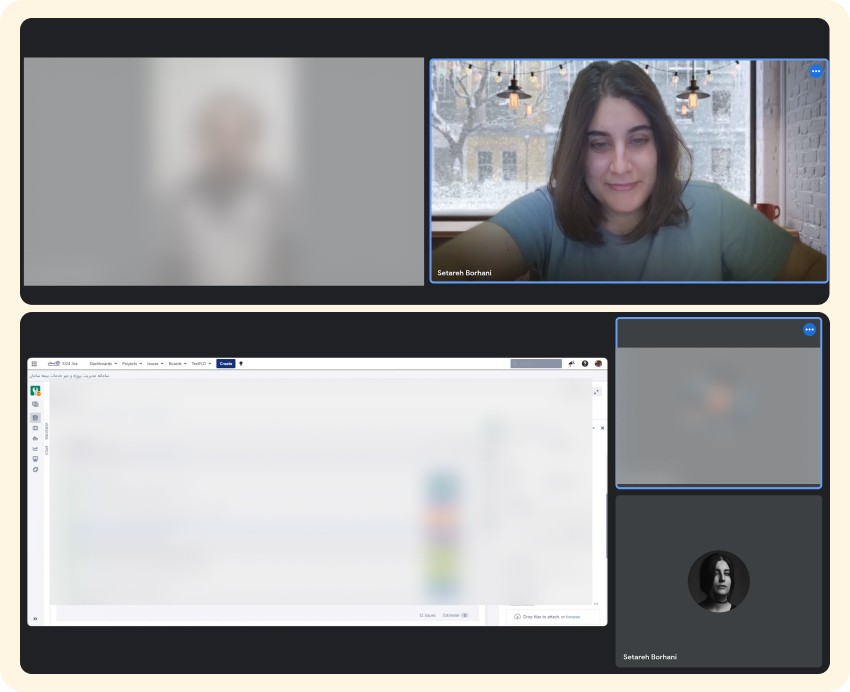
With no existing data to understand user behavior or pain points, I had to build my own. I mainly did this by observing life insurance experts using the old platform and having regular check-ins with the Product Owner and her assistant to understand the workflows, context, and pain points.
How I Came to Solutions?
| Design Decisions |
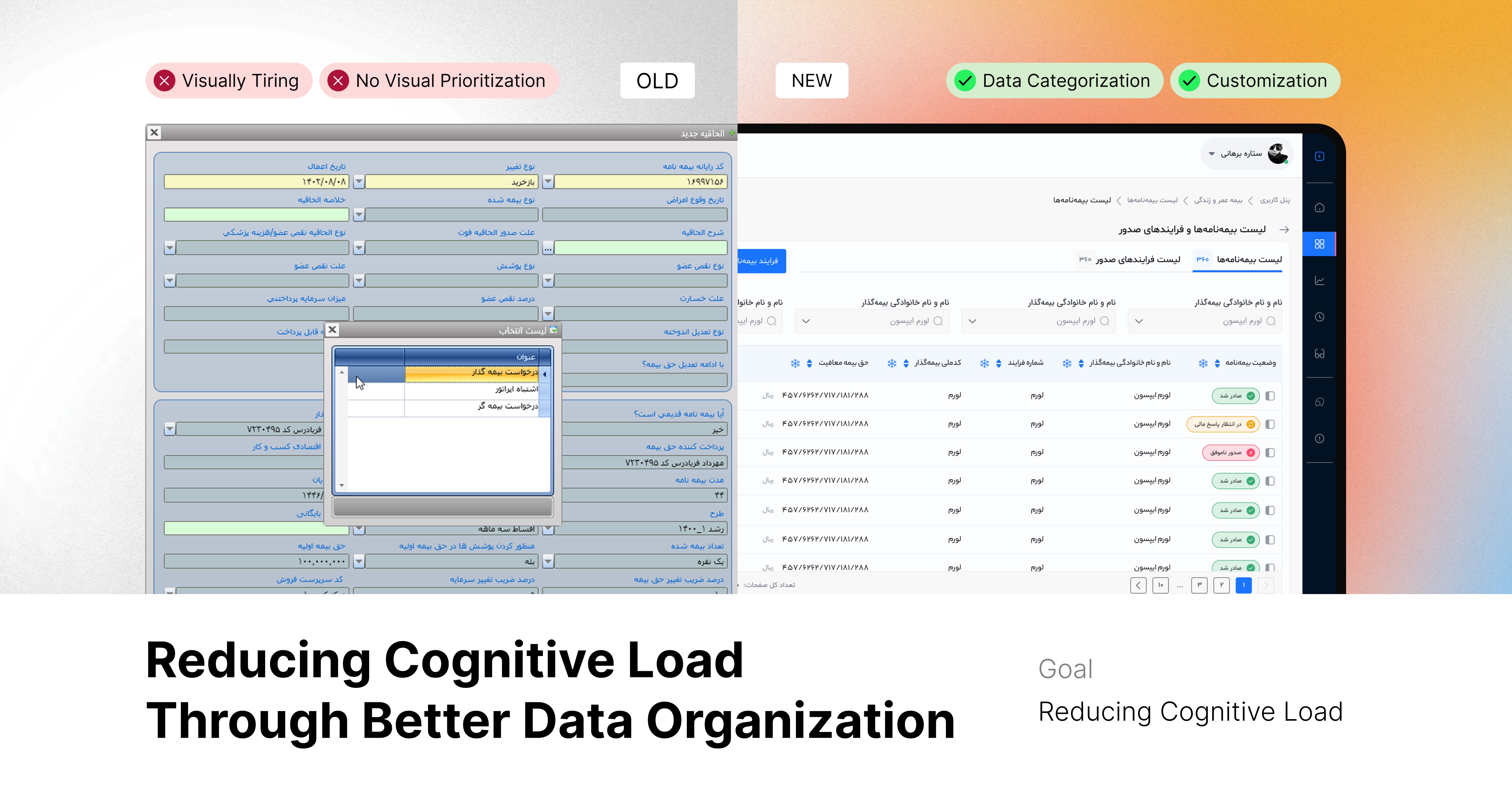
By observing life insurance experts using the existing panel, I saw how much time they lost searching through long tables and large amounts of information. This helped me simplify the experience through clearer tables, better navigation, prioritized information, and progressive disclosure.

How I Changed Working Culture
| Design Impact |
This project didn't end with the kind of numbers we often hope to see, but I wanted to share this one because it taught me just as much through its challenges as through its achievements, and because I believe meaningful design is about more than metrics.
Impact on Product Culture
As the company's first in-house product team, we were still building our product and UX practices. Although the project was later discontinued, some practices I introduced stayed with the team.
One was bringing KPIs and success metrics into our product discussions, which later became part of the team's product management training.
Impact on Collaboration
I introduced regular brainstorming and feedback sessions where I shared user flows, sketches and wireframes early with developers, product owner, her assistant and a life insurance expert. It reduced misunderstandings and gradually shifted design from "my solution" to "our team solution".
This project was full of twists, turns, and a lot of details, so squeezing it into a neat, linear process isn't easy. But to give you the big picture (and keep this case study from becoming a novel), here's the five main stages I went through:

Project Onboarding & Discovery
As a designer I needed to reduce the complexity of the project for myself. Two things helped me:
First, meetings with the product owner and the expert person.
Second, doing research: desk research, interviewing with experts and experienced designers in this area.


Mood Boards & Inspirations
I needed to create a mood board to get inspired and see how other designers approached to a dashboard design and extensive table design.

Sketches & Wireframing
I started sketching the formula space as the most important and the hardest part: faced the hardest part first.

Making a Difference Beyond New Screens
| Design Approach |
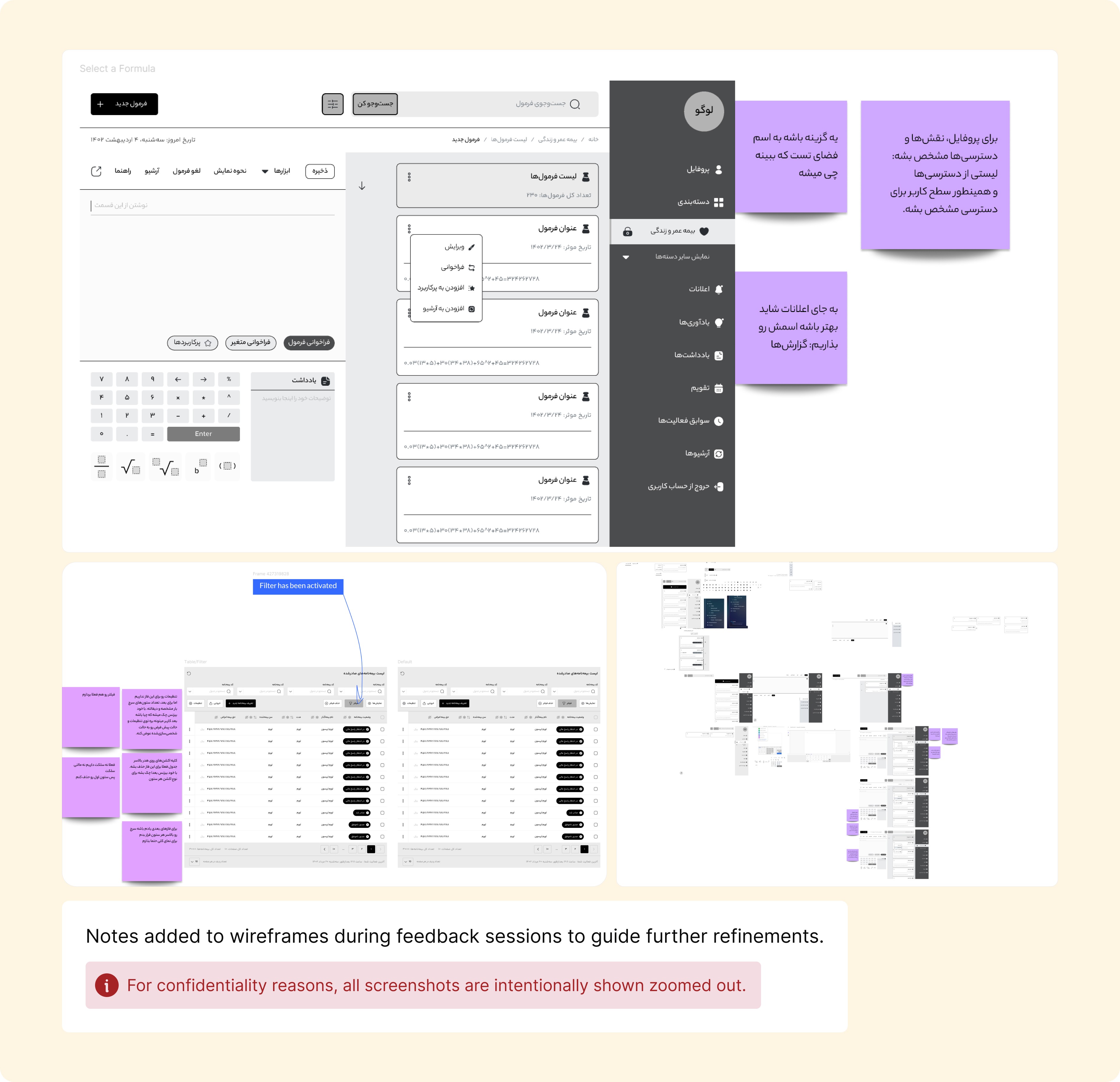
Beyond designing new pages, I simplified several user flows within the project constraints, making everyday tasks easier for the people using the system.
Feedback from the Product Owner and check-ins with ،three life insurance experts helped me see that these changes were actually making a difference.




Each insurance policy is built around a complex formula that changes depending on different conditions. Like mathematical formulas, these formulas include different functions, rules, and calculations.

Beyond a Product Designer Role
| More Than a Designer |
The project started without clear KPIs or success metrics, which made it difficult for me to understand whether my design decisions were actually improving the experience.
I brought this up with the Product Owner, CTO, and other stakeholders and discussed how we could better measure the results. We never ended up with a formal KPI framework, but together we agreed on a few practical metrics that I could use to guide and evaluate parts of the redesign.
Designing in a Low-UX-Maturity Environment
| Learning |
01/ Lessons Beyond Design
I had to learn how people communicated, made decisions, and worked together to find ways to move the project forward. It made me realize that understanding the team can sometimes be as important as understanding the users.
02/ Involve Developers Early
A few times, I refined an idea with the Product Owner only to find out later that it wasn’t technically feasible. Bringing developers into those discussions earlier could have saved us time and rework.